

The Quiet Exit
Productivity, Civic Trust, and the Future of New York

There is a quiet change taking place in New York City.
Most people feel it before they fully understand it.
It appears in the empty storefront that never reopens.
The neighborhood restaurant raising prices again.
The delivery fee that suddenly seems unreasonable.
The family quietly leaving for another state.
The young entrepreneur deciding to build somewhere else.
The company reducing office space while expanding operations hundreds of miles away.
These are not isolated events. They are signals. And together they raise a larger question.
What happens to a city when the systems that create prosperity begin to weaken?
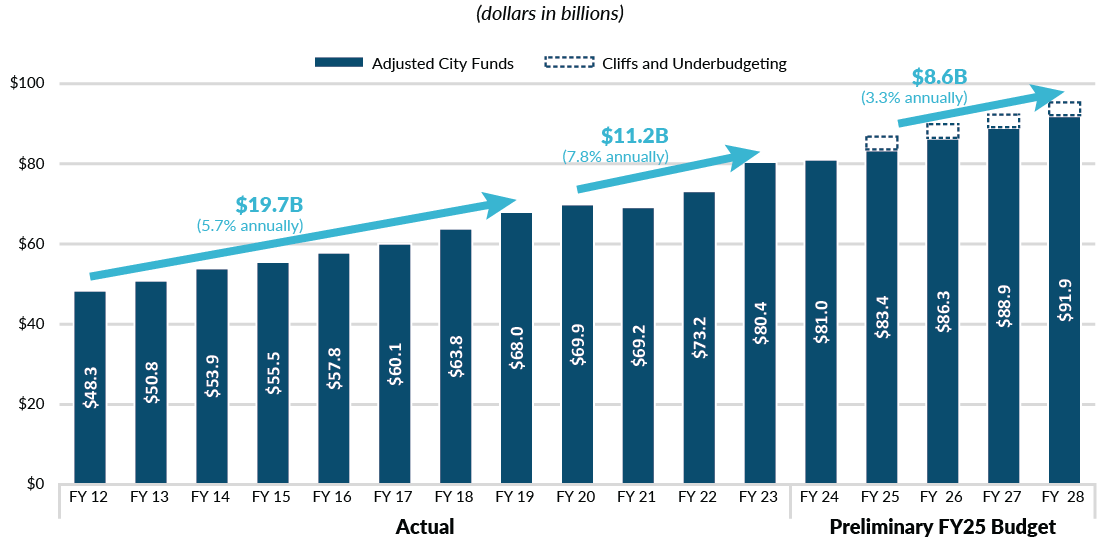
According to the March 24, 2026, report from the New York State Comptroller’s Office, New York City’s Fiscal Year 2027 preliminary budget reached approximately $127 billion, one of the largest municipal budgets in the world. The report warned that the city faces “structural budget gaps” that could threaten New York’s “fiscal stability, competitiveness, and affordability”.
Those words matter:
fiscal stability,
competitiveness,
affordability
Because they describe the foundation upon which everyday life in New York depends.
For generations, New York represented movement:
Movement upward;
Movement outward;
Movement toward opportunity
Immigrants arrived with little more than ambition and sacrifice. Families opened small stores, drove taxis, operated laundromats, repaired homes, delivered food, started restaurants, worked construction, and slowly built stability one paycheck at a time.
Many families came to New York not looking for guarantees - but looking for opportunity.
That spirit helped build New York into one of the great economic centers of the world. But today, something deeper is changing in our public conversation.
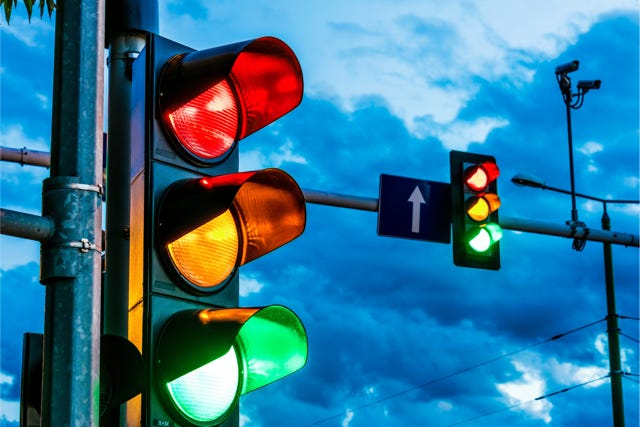
Which Signal Are you Getting?
In recent years, millions of Americans have quietly stepped away from institutions that once connected them to their communities. They have stopped attending meetings, stopped volunteering, stopped participating in civic organizations, and in many cases stopped voting altogether.
Before You Read Further, Ask Yourself One Question.
Are you moving forward, slowing down, or quietly stepping away?
Exploitation, Suspicion, Resentment
Increasingly, productive enterprise is discussed not with understanding, but with suspicion.
Success itself is often portrayed as evidence of exploitation.
Profit is treated as greed.
Investment is viewed as selfishness.
Leadership is framed as privilege rather than responsibility.
At the same time, many Americans are genuinely struggling.
Housing costs are rising.
Healthcare costs are rising.
Food costs are rising.
Small businesses face enormous pressure.
Working families feel squeezed from every direction.
These concerns are real and deserve serious attention.
But frustration alone cannot become economic policy.
Because when anger replaces understanding, societies begin attacking the very systems that sustain them.
Every citizen reaches moments when participation feels exhausting. The demands of work, family, disappointment, and frustration can make withdrawal seem easier than engagement. Yet history suggests that republics are rarely lost all at once. They are often surrendered gradually through a series of quiet exits.

The greatest threat to a republic is not opposition. It is indifference.
Most citizens experience businesses only from the outside:
through bills,
prices,
customer service calls,
insurance claims,
delivery fees,
or headlines about executive compensation.
What they rarely see are the pressures inside modern enterprise:
payroll obligations
insurance costs,
cybersecurity threats,
tax burdens,
regulatory compliance,
competition,
legal exposure,
inflation,
and the responsibility of keeping thousands of people employed during uncertain times.
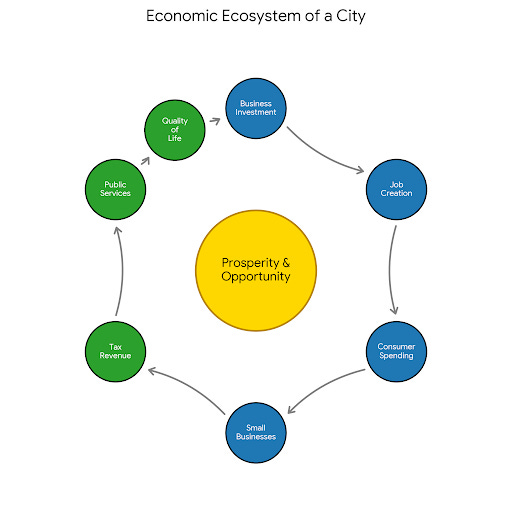
A business is not merely a logo on a building. It is an ecosystem of human beings.
Inside every large enterprise are:
workers,
retirees,
delivery drivers,
security officers,
accountants,
engineers,
maintenance crews,
restaurant suppliers,
software teams,
small vendors,
investors,
and families whose livelihoods depend on stability.
An immigrant family working two jobs may understand sacrifice better than most economists. But many citizens are never exposed to:
how payroll works,
how taxes affect hiring,
how regulations affect hiring,
how investment capital moves,
or how business expansion decisions are made.
That is not a failure of intelligence.
It is a failure of civic and economic education.
Meanwhile, the City’s own fiscal watchdogs are increasingly warning about long-term pressure.
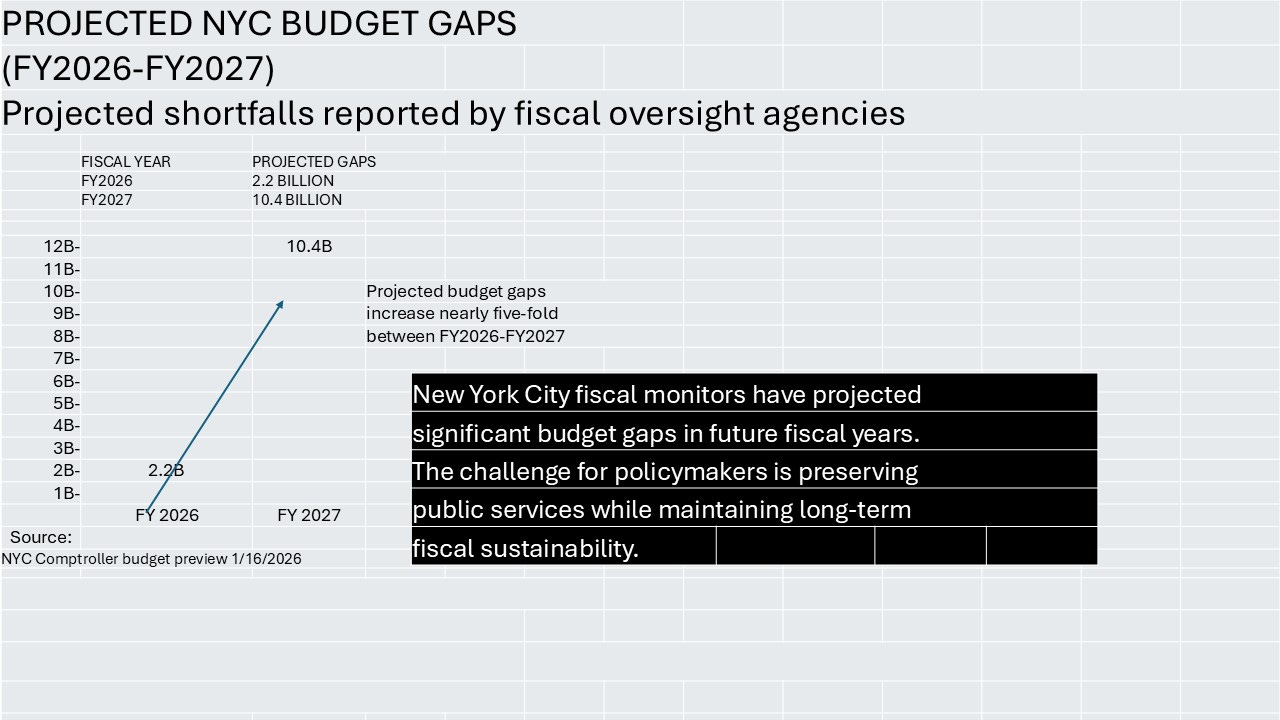
On January 16, 2026, NYC Comptroller Mark Levine projected a 2.2 billion shortfall for Fiscal Year 2026 and a 10.4 billion gap for Fiscal Year 2027, describing it as the largest projected budget gap since the Great Recession.
In March 2026, the Citizens Budget Commission estimated combined Fiscal Year 2026 and 2027 gaps at approximately 9.4 billion after adjusting for updated revenue and spending forecasts.
These are not partisan campaign organizations.
They are fiscal oversight institutions.
And their warnings deserve attention.
A city cannot continuously increase costs, uncertainty, and hostility toward productive enterprise without consequences.
Investment moves
Businesses relocate
Expansion slows
Young talent leaves
Capital searches for stability
Cities grow when investment enters and weaken when investment quietly leaves.
This is not ideology.
It is economics.
Even outside fiscal agencies, warning signs are emerging.
In March 2026, Moody’s revised New York City’s outlook from “stable: to “negative,” citing growing concerns over budget gaps and long-term financial flexibility.
The issue is not whether New York is failing.
The issue is whether New York is preserving the conditions that made it successful in the first place.
Every public policy has consequences, including unintended consequences.
At the same time, no serious person should argue that corporations are beyond criticism.
There is an enormous difference between criticizing misconduct and teaching citizens to believe that success itself is morally illegitimate.
Words matter.
Compassion without sustainability eventually weakens the very systems people depend upon.
New York became extraordinary because it attracted ambition, investment, energy, and opportunity from every corner of the world.
People came here because upward mobility felt possible.
The goal should never be blind worship of wealth.
Nor should it be resentment toward achievement.
The goal should be impact.
A healthy society should encourage people to:
build,
invent,
teach,
mentor,
hire,
repair,
invest,
lead,
volunteer,
and contribute.
A healthy economy is not built through resentment. It is built through contribution.
Economic success should be viewed not merely as personal gain, but as the byproduct of productive contribution to society.
That principle restores dignity to both work and enterprise. The future of New York will not be secured through ideological combat.
It will be secured through moral balance.
Compassion balanced with sustainability.
Worker protections balanced with economic flexibility.
Government responsibility balanced with fiscal discipline and restraint.
Business success balanced with ethical accountability.
The path forward requires more than slogans.
We need:
better economic education,
greater civic literacy,
support for entrepreneurship,
transparent government,
ethical business leadership,
responsible regulation,
and pathways toward ownership and upward mobility for ordinary citizens.
Most importantly, we must stop teaching to see one another primarily as oppressors and victims. We are far more interconnected than that.
The worker depends on the employer.
The employer depends on investment.
The investor depends on civic stability.
The city depends on all of them.
And if New York wishes to remain strong, dynamic, and livable in the decades ahead, it must once again become a city that encourages people not merely to survive - but to build.
SOURCES:
NYS Comptroller - March 24, 2026
DiNapoli: “NYC Budget Increases Transparency but Reveals Structural Gaps”
https://www.osc.ny.gov/press/releases/2026/03/dinapoli-nyc-budget-increases-transparency-reveals-structural-gaps
NYC Comptroller - January 16, 2026
FY2027 Budget Preview
https://comptroller.nyc.gov/reports/fy-2027-budget-preview/
Citizens Budget Commission - March 11, 2026
False Choice: NYC FY2027 Preliminary Budget
https://cbcny.org/research/false-choice
Moody’s/NYC Fiscal Outlook Reporting - March 2026
https://nypost.com/2026/03/12/us-news/nycs-credit-rating-on-downside-as-moodys-sounds-alarm-over-over-budget-gaps/